Laser Welding vs MIG Welding: Choosing the Right Process
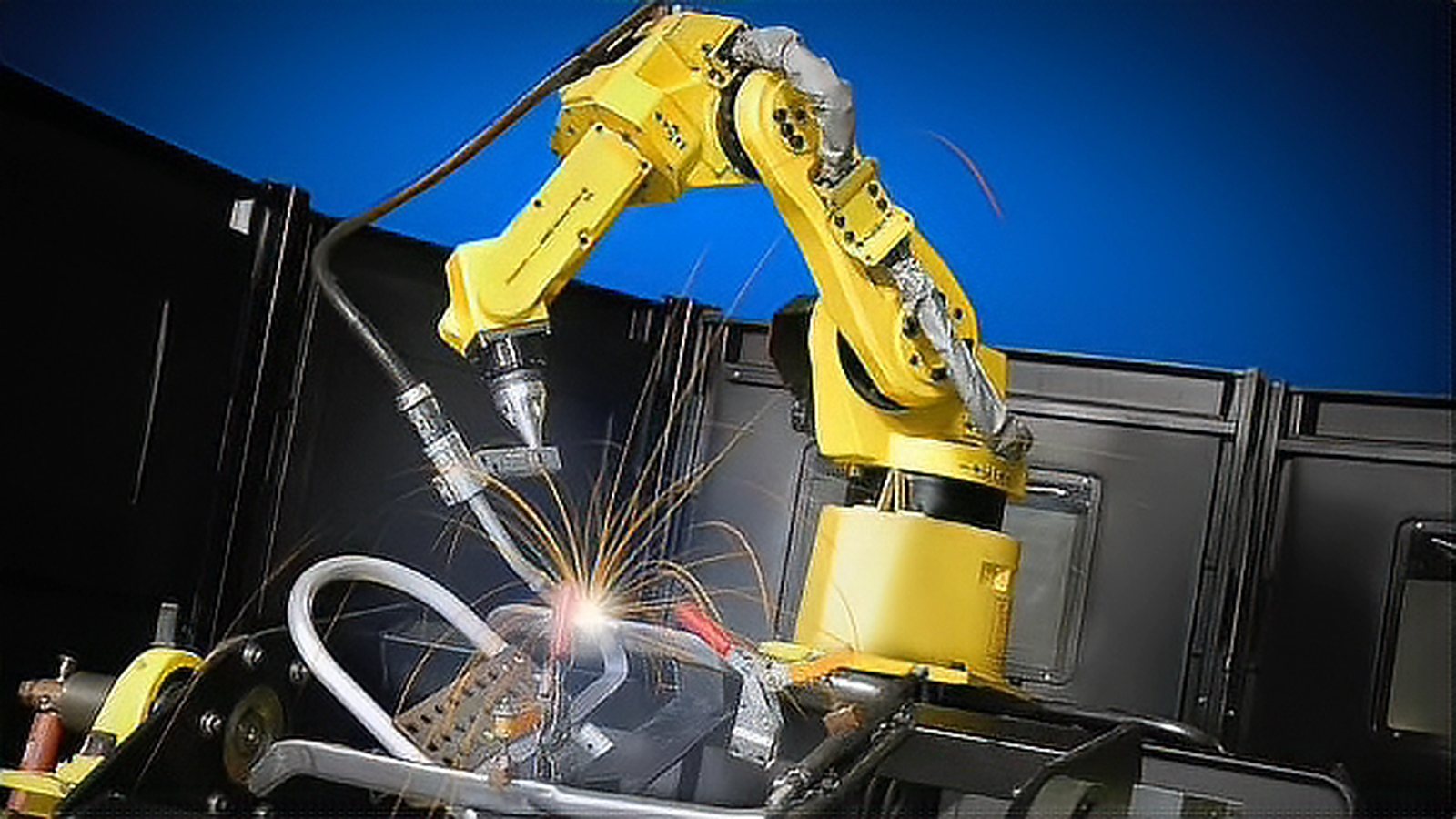
The choice between laser welding vs MIG welding comes down to four practical questions rather than to which process is more advanced: how thick the material is, how many identical parts you build, how much distortion the assembly can tolerate, and how tightly the parts actually fit. This article works through those questions in the order that normally settles the decision, and it flags the situations where the obvious answer turns out to be wrong.
Thickness Settles Most Cases Immediately
Laser welding is at its best from roughly 0.5 mm to 4 mm, where a 1 to 6 kW fiber laser joins material at speeds MIG cannot approach and with a much smaller heat affected zone. MIG is comfortable from about 3 mm upward and stays the cheaper answer for thick sections and for joints that need a large deposited volume, such as a fillet with a long leg length. The two overlap in the 3 to 5 mm band, and that overlap is where the other three questions decide the outcome. Above 8 mm, laser welding usually means either very high power or a hybrid arrangement, and MIG with a bevelled joint becomes hard to beat on cost per meter.
Batch Size and Fixture Cost
MIG tolerates part to part variation and joint gaps of a millimeter or more, which suits one off fabrication and heavy weldments where fixtures would cost more than the parts. Laser welding demands a tight joint, typically a gap below 10 to 15 percent of the material thickness, so it lives inside fixtures and clamps and often relies on seam tracking to stay on the centerline. That tooling is easy to justify when the same joint repeats thousands of times, and very hard to justify for a batch of five. For mixed low volume work, a programmable fixture and a laser with a wobble pattern can buy back some tolerance, but never as much as a MIG torch with a wider pool.
Distortion and Heat Input
The reason laser wins on thin and dimensionally critical parts is heat input per unit length. A keyhole weld delivers far less total energy to the part than MIG at the same thickness, so shrinkage and angular distortion stay small and welds can often be placed after machining without a straightening operation. MIG brings more filler and more total heat, which is an advantage when the joint has to bridge a gap and a liability when the assembly must stay flat. Distortion requirements written into the drawing, not the thickness alone, are often what pushes a job from MIG to laser.
Speed, Deposition and Where Each Process Wins
Laser is fast in travel speed but deposits almost nothing, so it is a poor tool for filling large gaps or building a fillet from scratch. MIG deposits kilograms per hour and can fill a bevelled joint in one or two passes, which is why structural work still belongs to arc processes. Speed also comes with a hidden condition: laser cycle time only pays off when loading, clamping and unloading are automated to match it, otherwise the robot spends most of its time waiting for an operator.
A middle ground exists and is widely used. Laser arc hybrid welding combines a laser keyhole with a MIG arc in the same pool, giving the penetration and travel speed of laser together with the gap bridging of MIG, and it is common in shipbuilding and heavy pipe fabrication. It costs more than either process on its own, so it earns its place only on thick joints that also need high travel speed and controlled distortion.
What to Check Before You Commit
Capital cost alone does not settle the choice. A laser cell adds optics, a chiller and a programmed fixture, while MIG adds a power source, a wire feeder and its own extraction equipment. Consumables behave differently as well: MIG consumes wire and gas continuously, whereas laser consumes shielding gas, cover glass and eventually optical components. Add the cost per part across the expected volume, including the labor for rework that poor joint fit causes in each process.
Take one real production joint and one spare set of parts, then weld it both ways at the volume you genuinely expect. Measure distortion and cycle time on the same fixture, because published comparisons rarely match your part geometry. Let the joint tolerance your shop can actually hold make the decision, and if that gap varies by more than a few tenths of a millimeter, plan for MIG or for laser with seam tracking and beam oscillation.
Comments (0)
No comments yet.
Sign in to join the discussion.