Pulse vs Continuous Wave Laser Welding: Choosing the Mode
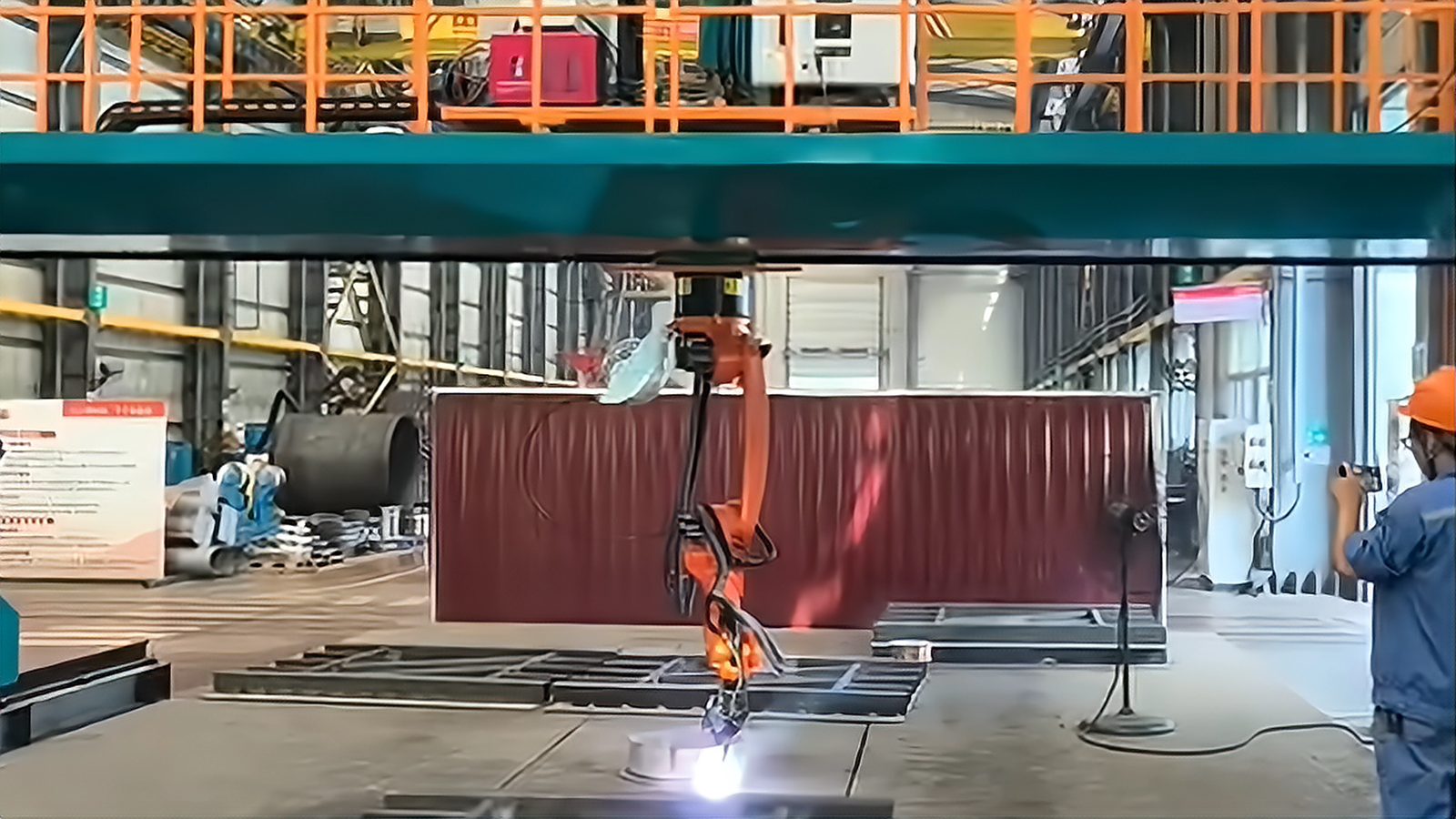
The choice between pulse vs CW laser welding mode changes everything about how heat enters the workpiece, from the size of the heat affected zone to the amount of distortion and the achievable cycle time. This article explains how each mode works, what pulse parameters do to the weld, when the keyhole effect of continuous wave welding is an advantage and when it is a liability, and how to pick the right mode based on material thickness and heat sensitivity.
How Pulse Mode Shapes the Heat Input
Pulse mode fires the laser in short bursts separated by off time, and the weld builds from a series of overlapping melt spots rather than a continuous line. Three parameters define the pulse shape. Peak power is the instantaneous power during the pulse and can be several times the rated average power of the source, which is how a 200 W average laser can deliver a 2 kW pulse. Pulse duration, or pulse width, controls how long each burst lasts and how deep each spot penetrates. Frequency sets how often the pulses repeat, and together with pulse duration it determines duty cycle, the fraction of time the beam is actually on. Average power equals peak power times duty cycle, and that relationship is the lever that lets pulse mode deliver high peak power for penetration while keeping total heat input low.
The overlap between pulses determines whether the weld is continuous or segmented. At high frequency and moderate travel speed, the spots overlap heavily and form a hermetic seam. At low frequency or high travel speed, the weld becomes a row of discrete spot welds. This control over heat input and overlap is why pulse mode dominates in battery tab welding, medical device assembly and electronics packaging, where the part sits close to heat sensitive components.
Continuous Wave and the Keyhole Effect
Continuous wave mode delivers a steady beam with no off time, and at sufficient power density it produces a keyhole, a vapor channel through the material that traps the beam and drives penetration far deeper than conduction alone could reach. The keyhole is what gives CW welding its characteristic narrow, deep, parallel sided weld profile. Because the beam stays on continuously, the keyhole stays open and the molten metal flows around it and solidifies behind, producing a continuous seam at high travel speed.
The keyhole also concentrates heat intensely. A CW weld at 3 kW moving at 2 meters per minute puts more total energy into a given length of seam than a pulse weld at the same average power. This makes CW the productive choice for structural welds, long seams on thicker sections and any application where cycle time is the priority. The tradeoff is a larger heat affected zone, more distortion on thin parts, and a risk of burn through on sheet below about 0.5 mm unless parameters are carefully tuned.
Pulse Parameters and Their Effect on the Weld
Peak power controls penetration depth per pulse. A higher peak drives the melt pool deeper, but if it is too high relative to pulse width, it produces spatter and a rough, concave bead. Pulse width controls the balance between heating and cooling within each cycle, and longer pulses at lower peak power tend to produce smoother beads with less spatter but more total heat. Frequency controls overlap, and a common starting point for hermetic seams is a frequency that gives 60 to 80 percent spot overlap at the chosen speed. Duty cycle ties it together, because raising frequency or pulse width raises duty cycle and therefore raises average power and total heat input.
The key insight is that pulse mode separates penetration from heat input in a way CW mode cannot. You can run high peak power for adequate penetration with a low duty cycle that keeps the part cool. This is why pulse mode is standard for welding thin stainless steel foils in the 0.1 to 0.5 mm range, and for joining dissimilar metals where differential thermal expansion would distort a CW weld.
Heat Affected Zone Distortion and Cycle Time Compared
The practical differences between the modes show up in three places. The heat affected zone of a pulse weld is typically narrower and shallower because each pulse allows conduction cooling between bursts, while a CW weld builds a continuous thermal gradient that extends further from the fusion line. Distortion follows the same pattern, because warping is driven by total heat input, and pulse mode at low duty cycle puts less total energy into the part. Cycle time favors CW decisively on long seams, because a continuous weld at 3 meters per minute finishes a 300 mm joint in six seconds, while a pulse weld achieving the same hermeticity might need twice the time or more.
Choosing the Mode for Your Job
The decision comes down to material thickness, heat sensitivity and throughput. For sheet below 0.5 mm, for parts near glass to metal seals, polymers or electronics, and for any joint where distortion must be held to a minimum, pulse mode is the standard choice. For sheet above 1 mm, for structural welds on steel or aluminum, and for any high volume job where cycle time drives the cell throughput, CW mode is almost always the better answer. For jobs that fall in between, such as 0.5 to 1 mm stainless with moderate distortion tolerance, test both modes on coupons and decide based on measured distortion rather than on theory.
Identify the thinnest section and the nearest heat sensitive feature on your part before choosing a mode. If either is within 2 mm of the weld path, default to pulse mode and tune for overlap. If the part is a structural weld on material above 1 mm with no nearby heat sensitive components, use CW and optimize travel speed for cycle time. Document the mode and parameters on the coupon record so the next similar job starts from a known baseline instead of a guess.
Comments (0)
No comments yet.
Sign in to join the discussion.