Laser Welding Safety: Enclosure, Eyewear and Interlocks
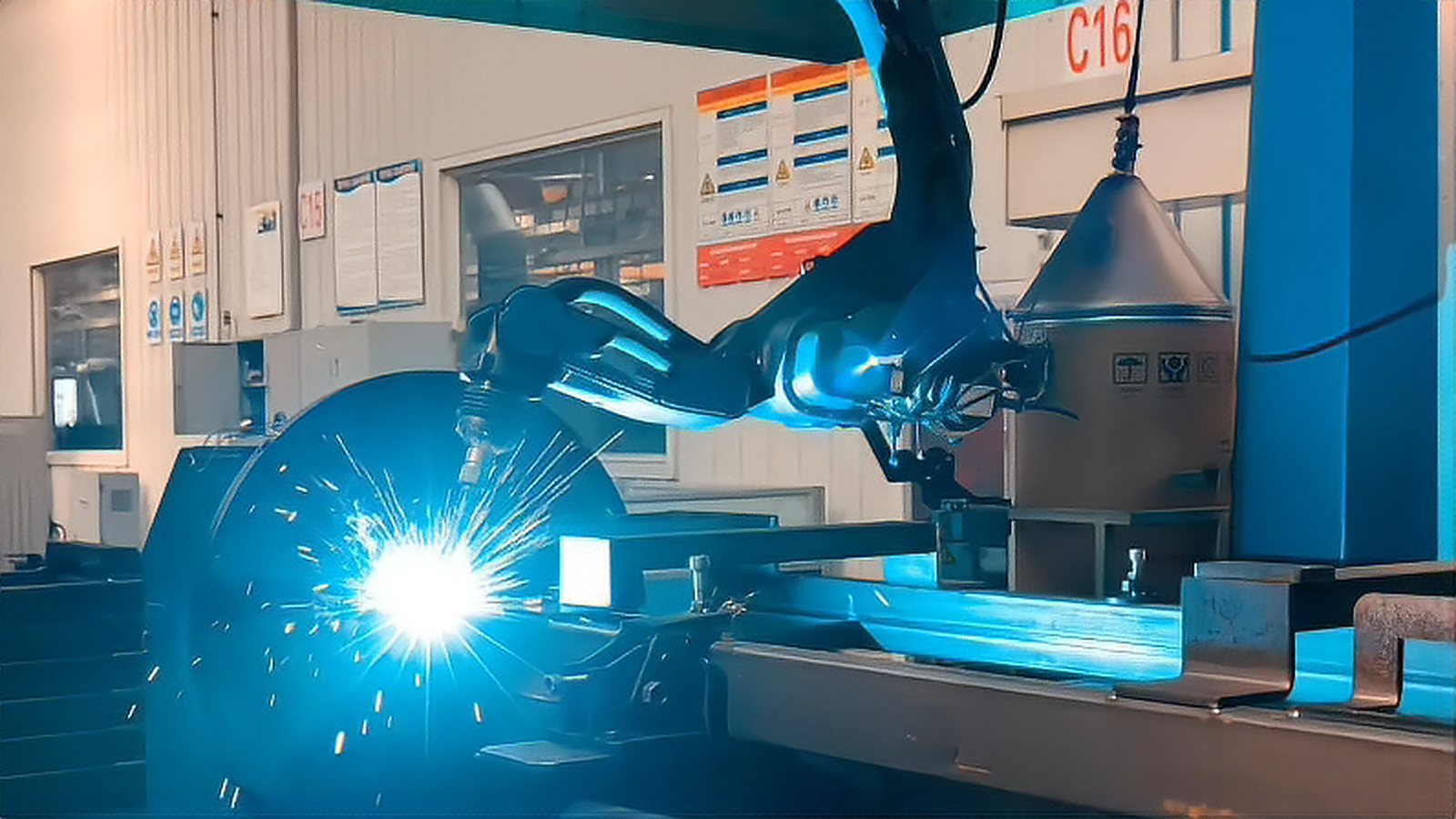
Laser welding safety is not a paperwork task that begins after the cell is commissioned, and treating it that way is how cells end up with interlocks that can be defeated and eyewear rated for the wrong wavelength. A fiber laser welding machine is almost always a Class 4 laser product, which means the beam stays dangerous even after a diffuse reflection. This article covers the four decisions that shape a defensible safety concept, which are classification and wavelength, the enclosure and its guards, the interlock and shutter logic, and the eyewear specification, followed by the administrative layer that keeps all of it valid in daily production.
Start With Classification and Wavelength
Part 1 of the IEC 60825 series defines the laser classification scheme and the measurement conditions behind it, and a welding source of a few hundred watts or more falls into Class 4. The published text of that standard is available from the IEC (https://webstore.iec.ch/en/publication/3587). The emission band matters as much as the class. Most industrial welding lasers work in the near infrared, commonly between about 1030 nm and 1080 nm, a range the eye cannot see and therefore cannot react to. Without a blink reflex, an accidental exposure lasts as long as the person remains in the beam or until the shutter closes, and that is the strongest argument for enclosing the whole process zone instead of relying on procedure. In the United States, laser products are also regulated under 21 CFR Part 1040, while OSHA covers the protective equipment side through its general industry standards, including eye and face protection at 1910.133 (https://www.osha.gov/laser-hazards/standards).
Enclose the Process Zone With Rated Guards
The reference document for guards is Part 4 of the IEC 60825 series, which separates fixed guards, interlocked guards and proprietary guards that have been tested as products (https://webstore.iec.ch/en/publication/30245). A practical enclosure uses steel or aluminum panels for the structure and a rated laser window where someone must watch the process. Specify that window by optical density at the working wavelength and ask for the test data, because ordinary polycarbonate and safety glass are not substitutes. Flexible curtains have a place around a manual workstation, but they are a poor primary guard for a full power beam, so a supplier who proposes one should be asked for beam hit results at the worst case power and dwell time. The enclosure also has to contain the beam path itself, including the delivery fiber, the optics module and any mirror or beam splitter, since a misaligned optic can send the beam somewhere the layout drawing never anticipated.
Interlocks and Shutters Need Defined Logic
An interlock that pauses the program while the beam stays on is not an interlock in any meaningful sense. Opening a guard must terminate emission, which means the shutter closes and the process stops. The circuit should be redundant and monitored, with a performance level agreed with the integrator and recorded in the risk assessment for the machine (https://www.iso.org/standard/67658.html). Two failure modes deserve attention during the design review. The first is the defeated switch, held shut with a magnet or a strip of tape, which a monitored circuit can catch through a plausibility check. The second is the assumption that an emergency stop kills the beam instantly. It does not. The shutter takes time to close and the source takes time to ramp down, so ask for that response time in writing and factor it into the access rules. Service work needs its own mode with a key, a reduced power setting for alignment and a defined beam stop.
Choose Eyewear for the Wavelength You Actually Use
Eyewear in an enclosed welding cell is a secondary control for alignment, service and troubleshooting, not a permit to work in an open beam. Selection begins with the wavelength, because optical density is only defined at a stated wavelength, and a lens rated for the visible band offers almost no protection against a 1070 nm beam while making the wearer feel protected. The three numbers to compare are optical density at the working wavelength, visible light transmission, and the impact rating of the frame and lenses. ANSI Z136.1 sets out eye protection expectations inside the nominal hazard zone, ANSI Z136.7 addresses the testing and labeling of laser protective equipment, and ANSI Z87.1 remains the impact protection baseline that most sites also require. The hard trade off is visibility. Lenses with high attenuation in the near infrared are often dark and green, which makes the seam difficult to see. If the enclosure makes eyewear unnecessary during production, say that in the procedure and reserve the eyewear for the tasks that genuinely need it.
Make the Administration Match the Hardware
A named laser safety officer, a written procedure for each task, warning signage at every entry point and a training record are the minimum. Alignment deserves its own documented method at reduced power, because that is the task where experienced technicians improvise. Fume extraction belongs in the same discussion, since metal vapor and process fume are a health hazard independent of the beam. Close the loop with a baseline eye examination, an incident reporting route and a review of the risk assessment whenever the part mix or the optics change.
Request four documents before installation, which are the classification and wavelength statement, the guard and window specification with optical density values, the interlock and shutter timing data, and the eyewear recommendation for your wavelength. Review them against the risk assessment, then walk the finished cell with the laser safety officer and check every access point against the drawing. Correcting an interlock logic gap at the drawing stage costs a fraction of correcting it once the machine is on the floor.
Comments (0)
No comments yet.
Sign in to join the discussion.