Total Cost of Ownership for a Laser Welding Robot
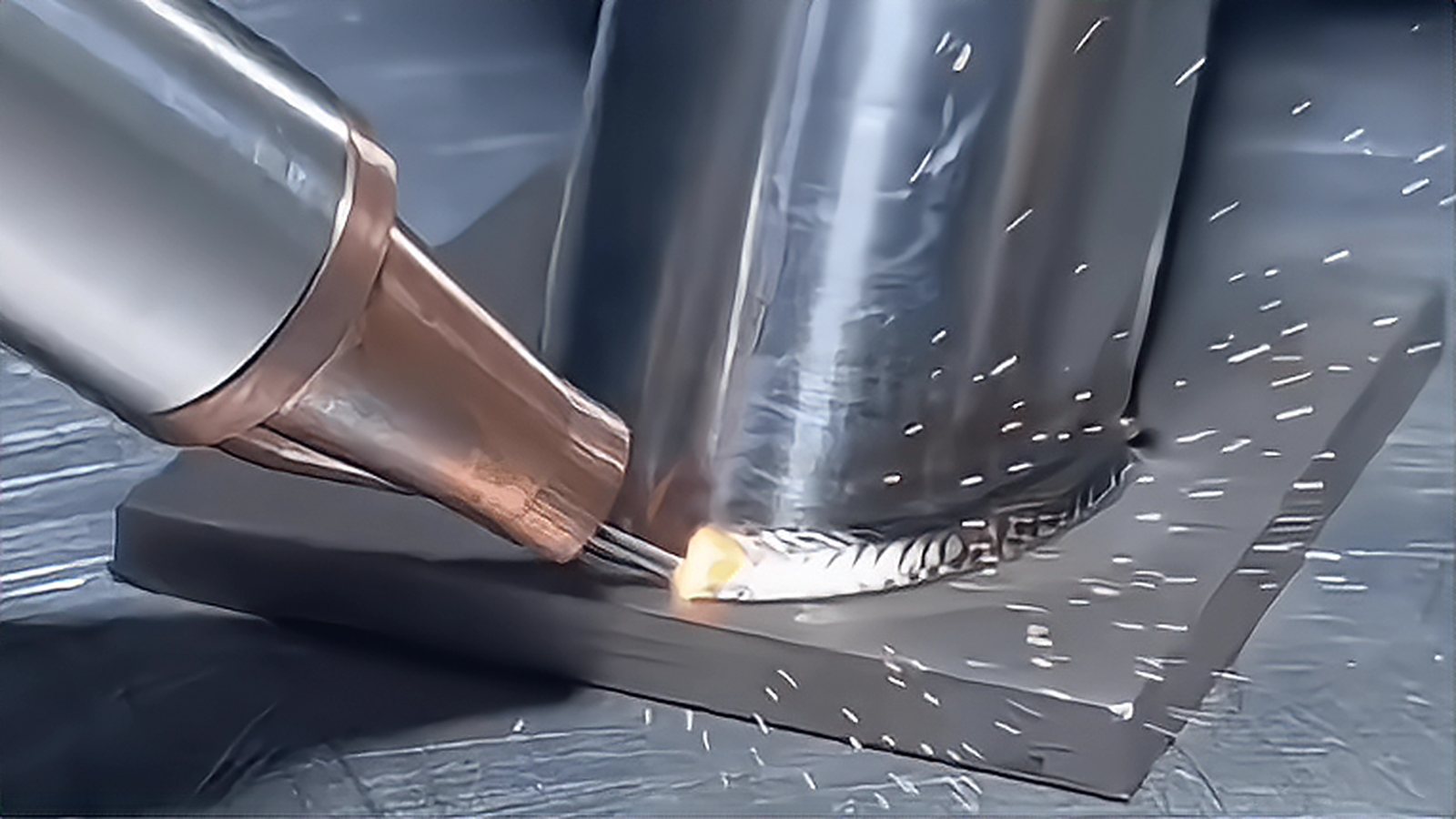
The purchase order is the smallest number in the calculation, and treating it as the headline figure is the most common mistake in justifying a laser cell. Total cost of ownership for a laser welding robot covers the source, the optics, the arm, the enclosure, consumables, utilities, maintenance labor, spares and the value of the hours when the cell is not producing. This article sets out how to build that number over a five to ten year horizon, which line items deserve the closest scrutiny, and how to structure the model so that a supplier can be held to it.
Beyond the Purchase Order
Installation scope is where budgets usually move, so ask for it in writing. A complete accounting includes the foundation or floor preparation, the safety enclosure and its interlocks, fume extraction and ducting, the chiller and its water circuit, compressed air, electrical supply upgrades, the fixture and its repeatability class, the initial spare parts stock, programming and commissioning hours, operator and maintenance training, and the cost of the floor area the cell occupies. Floor area is easy to forget and hard to argue with, because space claimed by a laser cell earns nothing else. Integration hours in particular should be quoted as a range with assumptions attached, since a first article that needs three iterations is normal rather than exceptional.
Consumables and Optics
The recurring material cost of laser welding sits mostly in front of the beam, not in the beam. Cover slide glass and protective windows are consumed according to spatter rate, which rises sharply on zinc coated steel and aluminum and stays low on clean stainless. Nozzles, shielding gas, filter media for the extraction unit, chiller coolant and deionized water top up the list. The laser source itself is a consumable on a long interval: diode modules and pump sources are commonly quoted with service lives in the tens of thousands of operating hours, so the number to plan with is your own beam on time per year rather than the catalogue figure. If the plant runs two shifts, that module replacement will fall inside the ownership period and belongs in the model from day one.
Energy, Cooling and Utilities
Power is the least accurate line item in most proposals. Industrial fiber laser sources commonly convert around thirty to forty percent of the electrical input into light at full power, and the remainder leaves as heat that the chiller must remove, so the cooling load is comparable to the laser load once the chiller's own efficiency is included. Extraction motors, compressed air for the fixture and the robot's servo draw add further load, and all of them run whenever the cell is powered rather than only when the beam is on. The practical consequence is that the energy bill tracks cell uptime, not welding time, which is why idle periods between batches are worth attacking. Meter the cell for a full production month instead of multiplying nameplate ratings, and then use the measured kilowatt hours per part as the baseline for any later claim.
Maintenance and Spares
Maintenance cost has two parts that behave differently: planned work and parts. Planned work is predictable, comprising optics inspection and cleaning, filter changes, chiller service, calibration checks, and the verification of interlocks and safety functions, all of which consume technician hours at a rate you can set from the schedule. Parts are lumpy, because a scanner mirror, a delivery fiber or a source module fails rarely but expensively. The trade off is between inventory cost and lead time. A spare that sits on a shelf for five years is still usually cheaper than a week of stopped production on a line that has no alternative, so the decision should be made from the cost of downtime rather than from the price of the spare. Staffing matters here as well, because a technician trained on MIG equipment needs specific instruction in optics handling, laser safety and the controller before they can carry the schedule.
Downtime Is the Largest Variable
Downtime dominates the model whenever production is constrained, and it is the line item most often left out. Start from the contribution the cell would have generated per hour, multiply by the hours lost, and add the ramp back to full quality when it restarts, because the first parts after an unplanned stop deserve scrutiny. Availability should be defined before the contract is signed, including whether planned service hours count against it and how the figure is measured. Scrap and rework belong in the same chapter, since a process that produces a small percentage of rejects carries an energy and labor cost per good part that is higher than the nominal numbers suggest.
Build the model with your own duty cycle, your own energy price and your own downtime cost rather than with a supplier template, and ask for consumption rates in units you can verify, such as cover slides per shift and filter changes per year. Compare the result against the process the cell replaces, covering the same horizon, because a fast laser cell with a long payback can still lose to a slower arc process that needs no chiller, no enclosure and no optics program. Revisit the model after twelve months of operation, when the assumptions that were wrong have usually revealed themselves.
Comments (0)
No comments yet.
Sign in to join the discussion.