Spatter in Laser Welding: Causes and How to Control It
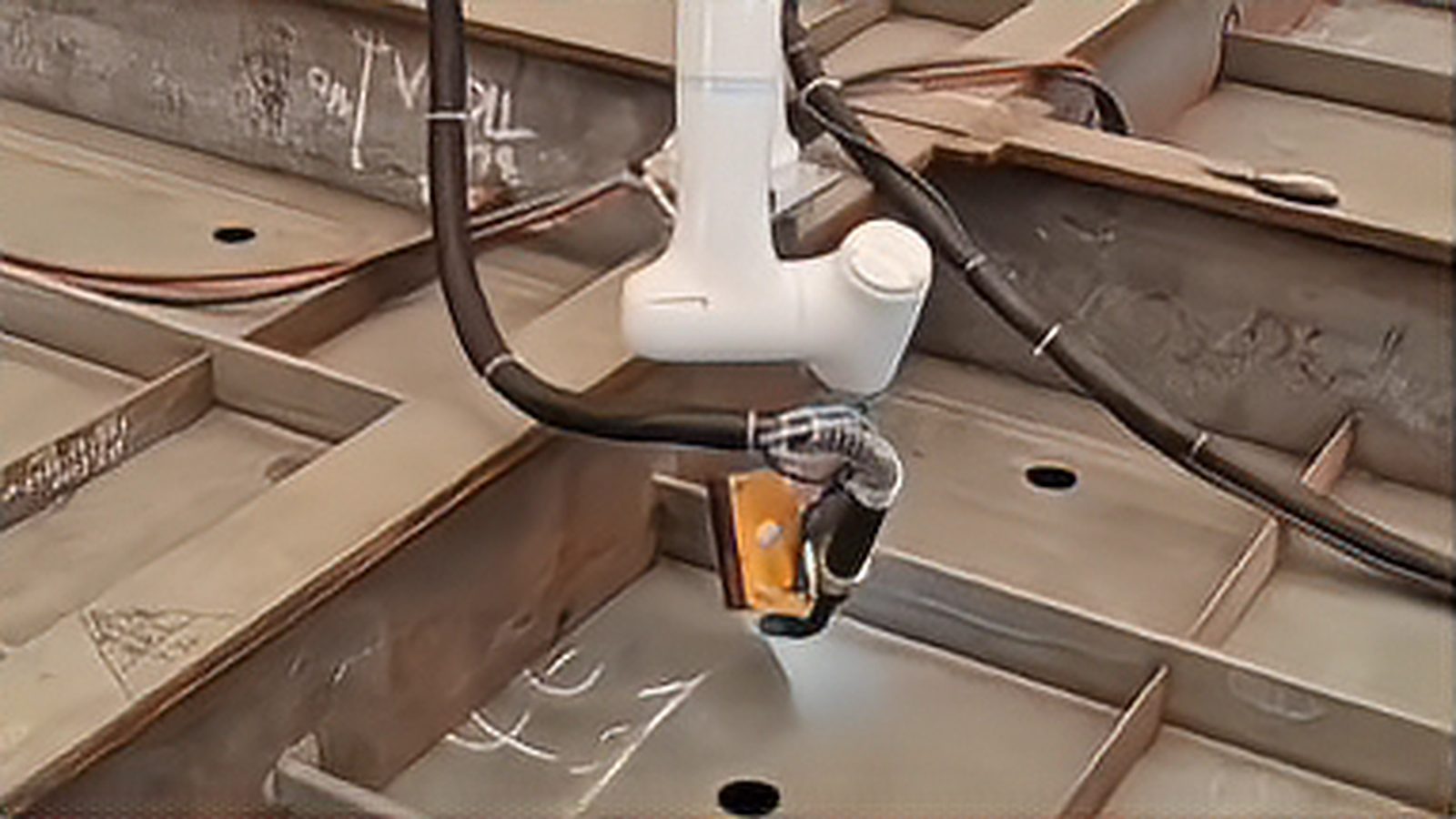
Spatter is the defect everyone sees and almost nobody measures. Droplets land on fixtures, nozzles, cover glass, and the part, and the cost returns as cleaning labour and rejected surfaces. Because spatter has more than one source, blaming the parameters alone sends you down the wrong path. This article sorts spatter by cause and gives you a checking order for the floor.
What spatter is and where it comes from
Spatter is molten metal that leaves the pool and solidifies where it should not. In laser welding it comes from one of two places: the keyhole, where a collapsing vapour channel ejects liquid as coarse droplets, or the pool surface, where a fast gas jet or violent evaporation tears droplets from the melt. The two respond to different corrections, and neither is the same as spiking or humping, so name the symptom before you tune anything.
How spatter is classified and judged
Standards give you a shared language for what a defect is. ISO 6520-1:2007 classifies geometric imperfections in fusion welding, so a surface mark becomes a named discontinuity. ISO 13919-1:2019 sets quality levels for imperfections in electron and laser beam welded joints in steel, nickel, titanium and their alloys from about 0.5 mm upward, and defines the levels B, C, and D. ISO 13919-2:2021 covers aluminium, magnesium and pure copper. Agree the quality level before arguing about a part.
Why the keyhole drives most spatter
A keyhole is held open by a balance between metal vapour pressure pushing outward and surface tension plus gravity trying to close it. The keyhole breathes, and now and then it pinches off or collapses, throwing spatter and often a pore with it. Anything that weakens stability makes spatter worse, and one common cause is simply too little energy to hold the channel open at your travel speed. A steady rhythm, rather than random droplets, points to keyhole instability.
What the research says about keyhole spatter
Published work helps you think about the mechanism without inventing numbers. Sato and Tsukamoto, in a LiM 2025 conference paper on spatter suppression in keyhole welding, studied ejection behaviour in steel with a 16 kW disk laser and argued that controlling the keyhole and the melt flow around it is central to reducing spatter. Fraunhofer ILT points to beam shaping and adaptive process control as ways to suppress such defects, so treat spatter as partly a beam-shape and control problem, not only a power-setting problem.
Power density, focus position and spot size
Power alone is a poor guide, because power density at the workpiece sets the behaviour. Deep penetration typically starts somewhere in the range of a few hundred kilowatts per square centimetre and rises toward the megawatt-per-square-centimetre region; below that range the process falls back toward conduction mode, and well above it evaporation turns violent and droplets fly harder. Treat those as typical ranges, not measured setpoints. Focus position is the quickest lever on that density, so review focus offset and spot size in this guide to laser welding parameters.
Travel speed, wobble and oscillation
Travel speed sets how long the beam dwells on a point, and dwell time controls pool size and evaporation. Run too slowly and the pool grows, the surface overheats, and spatter rises; run too fast and the keyhole can destabilise as it struggles to stay open. Wobble welding spreads the same energy over a wider area and widens the melt zone through beam oscillation, which often reduces spatter and improves gap tolerance. Tune amplitude and frequency together.
Surface condition, coatings and zinc
Oil, rust, mill scale, oxide film, and coatings vaporise under the beam and blow material out of the pool, which is why a part that welds cleanly after degreasing can spatter the next day. Zinc is the hardest case: it boils far below the melting point of steel, so its vapour must escape through the pool. TWI, in its 2000 paper on laser welding automotive steel and aluminium, notes that spatter from coated sheet can contaminate the optics, and that on thin sheet the butt gap generally has to stay below roughly 10 to 15 percent of the thickness.
Shielding gas direction and flow
Shielding gas also suppresses the plasma plume and helps stabilise the keyhole. It is tempting to open the regulator wide, but an oversized turbulent jet can tear droplets off the pool and drive them across the part, which is spatter created by the gas itself. Too little flow weakens plasma control. Set flow within the range the machine builder states, and prefer a laminar stream to a wide blast that disturbs the pool.
Fit-up, gap and fixturing
Gap and mismatch change the joint geometry as the beam arrives. A gap lets the beam drop through and distorts the keyhole, while mismatch at a butt edge means one side melts earlier and the pool becomes uneven. Weak fixturing makes it worse, because a part that shifts under thermal load changes the gap mid-weld. Confirm the joint closes the way the drawing assumes, the discipline behind a structured view of welding defects.
Setting an acceptance threshold and the checking order
Zero spatter is not a realistic target, and treating it as one drives endless tuning on acceptable parts. Define instead what is acceptable per surface: a maximum droplet count on a visible face, a limit near a seal or coating, and an agreed cleaning time per unit. Put those numbers in the work instruction and inspect to them. To catch drift between inspections, in-process monitoring can help, but the limit must be defined first.
Treat spatter as a signal rather than background noise, and change one variable at a time so you can attribute the result. The wider family of welding problems rewards the same rule: find the source before you tune the number.
Sources and references
- ISO 13919-1:2019 Electron and laser-beam welded joints - Quality levels for imperfections - Part 1: Steel, nickel, titanium and their alloys - defines the B, C and D quality levels used to judge beam-weld imperfections such as spatter View source
- ISO 6520-1:2007 Welding and allied processes - Classification of geometric imperfections in metallic materials - Part 1: Fusion welding - provides the vocabulary that turns a surface mark into a named discontinuity View source
- TWI What is Weld Spatter? A Complete Guide - explains that spatter becomes a defect only when it exceeds the allowance set by a specification or standard View source
- TWI Laser welding automotive steel and aluminium (2000) - links coated-sheet spatter to contamination of optics and gives the thin-sheet butt gap guideline View source
- Sato and Tsukamoto, LiM 2025 conference paper - studies keyhole spatter suppression in steel with a 16 kW disk laser View source
- Fraunhofer ILT laser welding research page - describes beam shaping and adaptive process control as ways to suppress welding defects View source
Comments (0)
No comments yet.
Sign in to join the discussion.